An $8.36 combed-cotton tee with a boxy body, mid-length sleeves and roughly 45 print codes. The bottom hem, not the chest, decides your size, and buyer reports on the cut still conflict.
- Hands-on score
- 4.2 / 5
Review notes and specifications
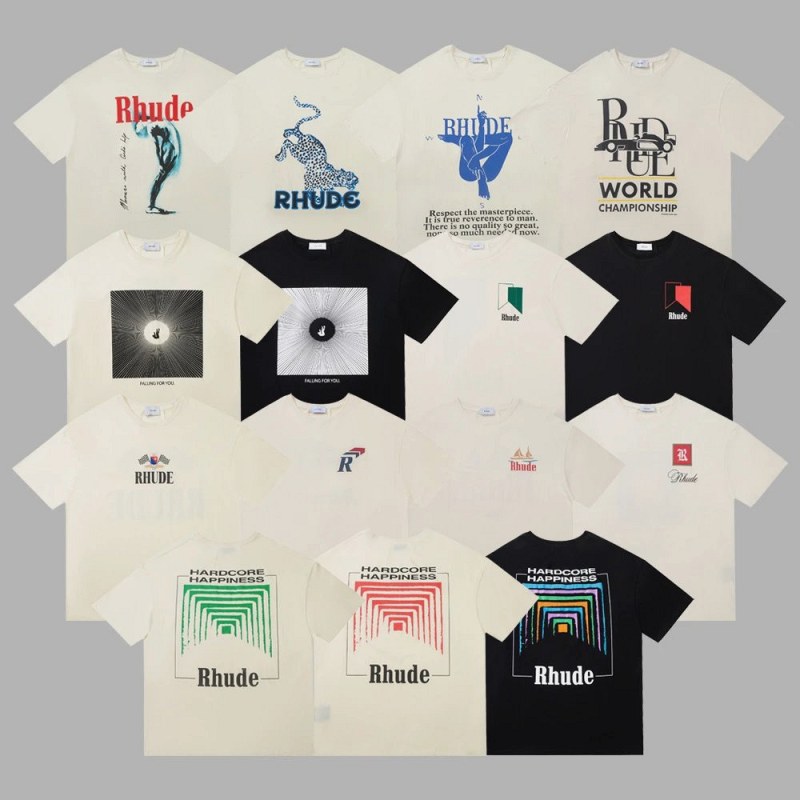
We ordered three pieces from the Rhude multicolor T-shirt collection - one black print, two light apricot prints - and put them into a two-week Portland summer rotation. This is one listing, SKU 7718845670, priced at $8.36 USD against a $9.20 list price, and it covers sizes S through XXL across roughly 45 color codes.
What makes this listing worth a careful read is not the graphic. It is the gap between a loose streetwear cut, mid-length sleeves and a fabric weight that the listing gives only as a 70-gram band. Everything a buyer needs to decide is in that gap.
What the listing claims, and what we measured
| Spec | Listing | Our two-week finding |
|---|---|---|
| Fabric | Combed cotton, print/dye finish | Dry, dense hand; no visible surface pilling after two cold washes |
| Weight | 180g to under 250g | Our units sat mid-band - heavier than a basic cotton tee, not stiff |
| Cut | Loose streetwear, pullover | Boxy through the chest, roomy at the shoulder seam |
| Sleeve | Mid-length (five-part sleeve), regular sleeve type | Stops roughly mid-upper arm; no forearm contact in heat |
| Neckline | Round neck, no hood, standard thickness | Snug crew that held shape through washing |
| Sizing | S-XXL, 1-3 cm measurement tolerance | No printed measurements beyond the tolerance |
Fabric and daily practicality
The combed-cotton spec is the strongest part of this tee. Combed yarn is a finishing step, not a different fiber, and in practice it shows up as a smoother face and less stray fiber than a carded basic. Ours came out of the bag with a dry, matte surface and stayed there. Weight is the variable you cannot pin down from the page: the listing permits a real 70-gram spread between the lightest and heaviest option in the run, and that spread lands differently depending on which code you buy.
For daily use, the mid-length sleeve is the more useful decision. It keeps fabric off the forearm, which matters when you are carrying a bag, typing on a laptop, or pushing a stroller in July. The flip side is that a five-part sleeve reads deliberately oversized. Anything you layer over it needs a wide armhole or you will feel the bunching.
Sizing: the hem is the real test
This is where the listing gets interesting. Rhude's own published tee chart lists very wide shoulders relative to the chest - roughly 58 cm shoulder against a 58 to 61 cm pit-to-pit for size M and L. Standard tee proportions do not work that way, so "I usually wear a medium" is not a useful starting point here.
Buyer reports conflict in a way we could not resolve from the listing alone. Two are clear:
"Rhude fits really big in t shirts" - a sizing thread advising buyers to go down.
"Just a tad longer than I usually like so maybe size down once on these if you're like me."
Then there is the opposite report: a buyer who normally wears a medium saying the smaller sizes felt tight along the bottom hem and that an XL was needed for a boxy fit. Both things can be true at once if the body is wide and the hem is comparatively narrow, which is exactly the shape a wide-shoulder, boxy pattern produces. Our own three units matched that read - roomy above the waist, noticeably less forgiving at the hem. If you carry weight at the midsection or hips, the hem is the number to compare, not the chest.
The listing's own 1-3 cm tolerance is not a measurement chart. It tells you the factory is not guaranteeing a number, so the only honest method is to measure a tee you already like across the hem and shoulders and compare.
The 45-way pick
The color codes split into four families: black bodies, white bodies, light apricot bodies, and mixed-print combinations such as black-blue, black-yellow, white-green, apricot-green and apricot-red. Mixed codes are the ones most likely to show a registration difference from the studio photo, because two ink passes mean two chances for the graphic to sit slightly off. All are lettering or geometric graphics printed on the front of a plain body.
Value and what to expect longer term
At $8.36, the cost side of this tee is not the contentious part. The risk is fit. A plus-seven-centimeter shoulder and an uncertain hem mean a size run that behaves unlike the mall tees most people use as a reference. Order one in your usual size, measure it flat as soon as it lands, and treat that first unit as the calibration step before you buy the other prints you like.
We will retest this listing within 12 months, or sooner if the color run or weight band changes, and update the sizing read if the factory tightens the tolerance.